
January 2, 2026
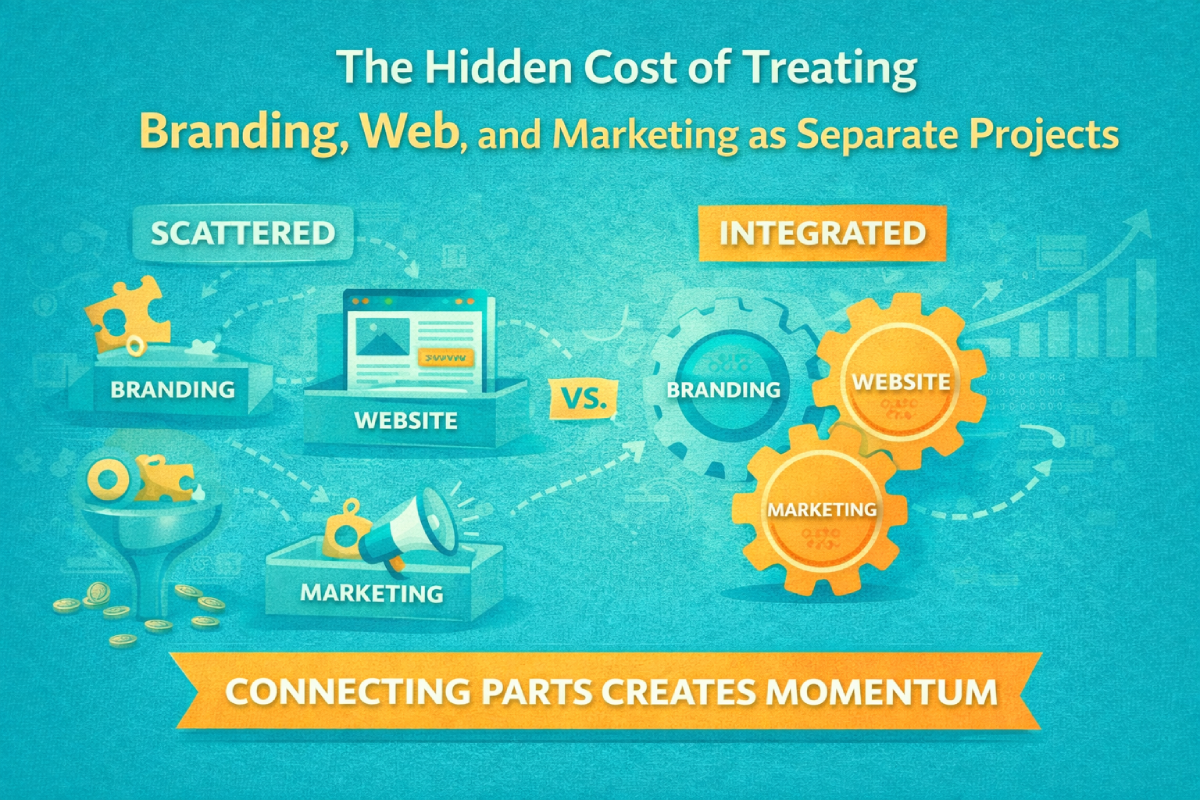
Many businesses approach branding, websites, and marketing as separate initiatives. A logo project here. A website redesign later. Marketing campaigns added when time allows. On the surface, this seems practical.
Over time, it becomes expensive.
The cost isn’t always obvious. It shows up in extra revisions, repeated explanations, and decisions that don’t quite line up. Messaging drifts. Design choices feel inconsistent. Marketing works harder than it should to compensate.
Each piece may be well executed on its own, but together they don’t reinforce each other.
When branding is handled separately from web design, websites often lack a clear voice. When marketing is added without revisiting the site, campaigns drive traffic to pages that aren’t ready to convert. When design decisions aren’t grounded in strategy, visuals feel polished but disconnected.
These gaps create friction. Teams spend time fixing symptoms instead of addressing root issues. Updates take longer because context has to be re-explained. Vendors work in silos, each solving only part of the problem.
There’s also a strategic cost. Opportunities get missed because no one is looking at the full picture. Messaging isn’t optimized across channels. Improvements happen in isolation rather than compounding over time.
When branding, web, and marketing are planned together, decisions support each other. Strategy informs design. Design supports usability. Marketing amplifies what’s already clear.
This integrated approach doesn’t have to be complicated. In fact, it often simplifies things. Clear positioning leads to clearer content. Clear content leads to better design decisions. Better design supports stronger marketing performance.
The hidden cost of separation isn’t just money. It’s momentum.
When everything works together, progress feels smoother. Effort compounds instead of resetting with each new project.