
July 5, 2025
A website redesign is often seen as a reset button. When results stall, redesigning feels like action. Sometimes it’s the right move. Other times, it’s an expensive distraction.
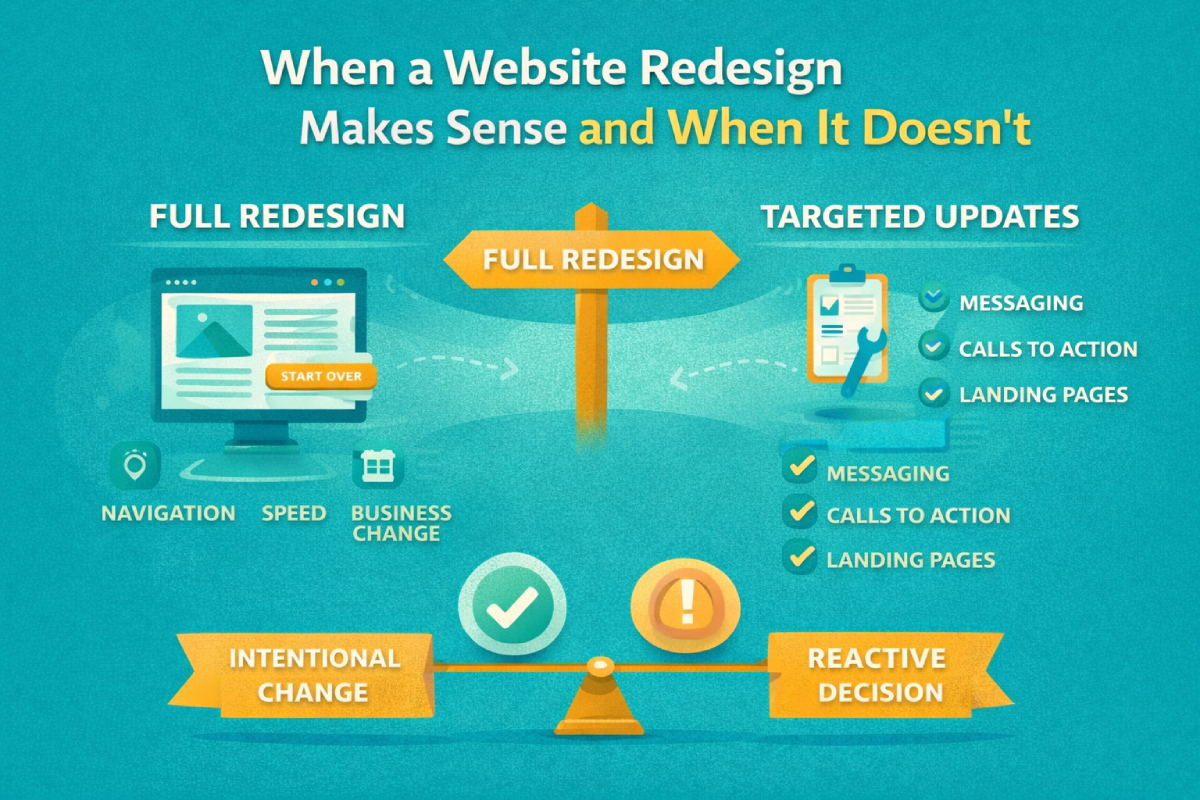
A redesign makes sense when the foundation no longer supports your goals. If your site is difficult to navigate, hard to update, slow to load, or no longer reflects your business, those are structural issues. In those cases, a redesign can unlock progress.
It also makes sense when your business has changed. New services, new audiences, or a new positioning often require a different structure and message. Trying to force new goals into an old framework creates friction.
Where redesigns go wrong is when they’re used to fix unclear strategy.
If traffic is low, a redesign won’t solve visibility issues. If conversions are weak, the problem may be messaging or offer clarity, not layout. If marketing feels ineffective, the issue may be alignment, not aesthetics.
Redesigning without clarity often leads to surface-level improvements. The site looks different, but performance stays the same. Frustration grows because the investment didn’t deliver meaningful change.
Before committing to a redesign, it helps to step back. What problem are you actually trying to solve? What isn’t working today? What does success look like after launch?
Sometimes the answer is a focused update instead. Improved messaging. Clearer calls to action. Better landing pages. These changes can deliver results without starting over.
A redesign works best when it’s intentional, not reactive. When it’s tied to clear goals, it becomes a growth tool instead of a cosmetic upgrade.