
February 2, 2026
Many small business websites don’t fail because of poor effort. They fail because of unclear priorities.
It’s common to invest time and money into design, content, or marketing without stepping back to define what the website is supposed to accomplish. When that foundation is missing, performance suffers.
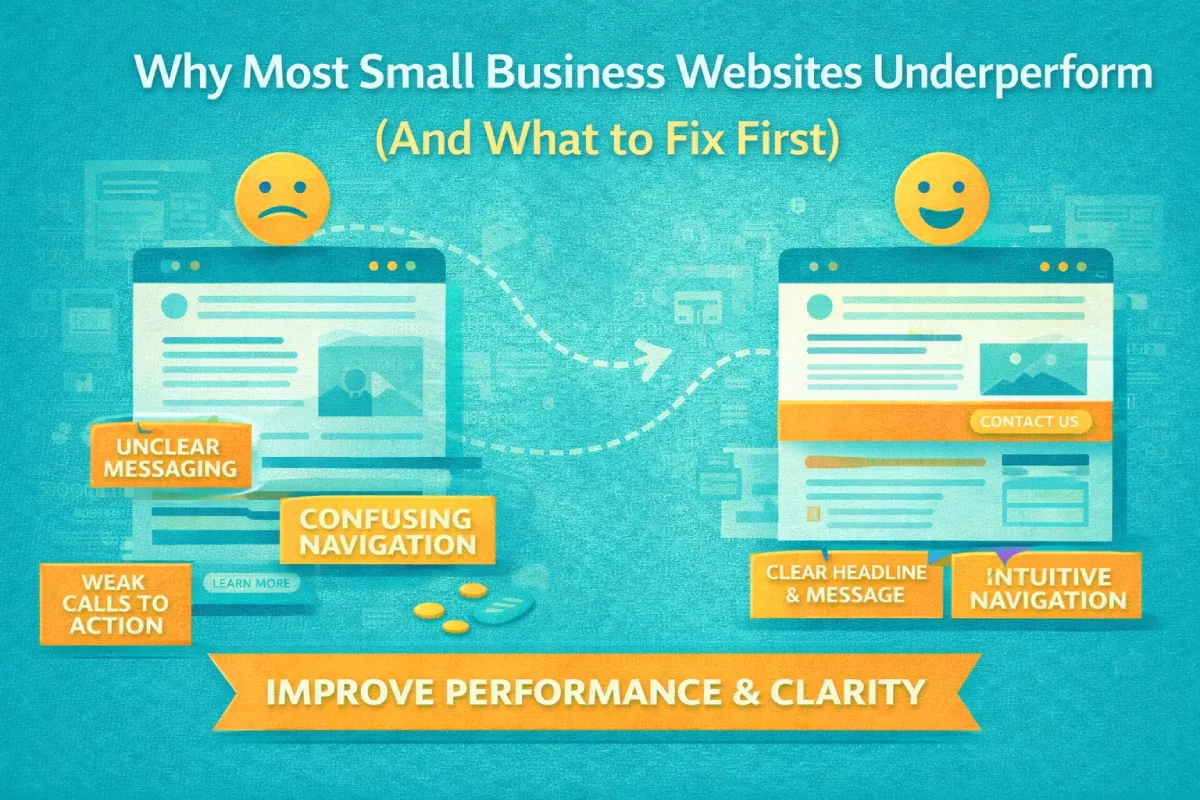
The first issue is usually messaging. Visitors should immediately understand what you do, who it’s for, and why it matters. If they have to read multiple paragraphs to figure that out, they’ll leave. Clear headlines and simple positioning often improve performance more than a full redesign.
The second issue is structure. Navigation should feel intuitive. Visitors shouldn’t have to hunt for services, pricing, or contact information. A confusing layout creates friction, and friction reduces conversions.
Another common problem is lack of focus. Many websites try to speak to everyone. When messaging becomes broad, it becomes weak. Strong websites speak directly to a defined audience and make that audience feel understood.
Performance also plays a role. Slow load times, broken links, or outdated plugins quietly damage trust. Even if visitors don’t consciously notice, the experience feels less professional.
Calls to action are another weak point. Many small business websites bury their next step or make it vague. A clear, outcome-focused call to action helps visitors move forward confidently.
Before investing in more traffic, fix clarity. Before redesigning everything, simplify structure. Often, small strategic improvements outperform large cosmetic changes.
A website should function as a working asset, not just an online placeholder. When built with intention, it supports marketing, sales, and growth consistently.